EIWH Reports
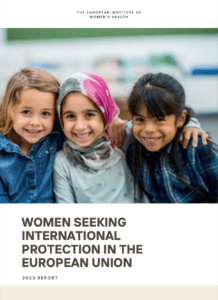
Women Seeking International Protection in the European Union
2023
Removing barriers and empowering migrants to integrate and contribute to European society is increasingly important due to the continued influx of people seeking international protection as a result of conflict and climate change and continental economic stagnation. Supporting this vulnerable population requires an integrative approach that considers their mental health. This report examines the need to address gender differences in refugee, asylum seeker, and displaced person mental health, specifically depression, anxiety, and post-traumatic stress disorder (PTSD); synthesizes examples of mental health interventions that respond properly to women seeking international protection’s psychological distress; and provides respective evidence-based policy implications.
Maternal Health in the European Union
2023
This report explores the nuances in conceptualising maternal health and the intricate landscape affecting maternal health outcomes in Europe. Split into two main sections, the Maternal Healthcare Journey and the Maternal Healthcare Context, this report examines a range of issues and factors affecting maternal and infant health such as public health; health promotion and disease prevention; access to care and information; birth, labour and delivery; health condition management; and the safe use of medication in pregnancy and lactation. Maternal healthcare outcomes are not homogenous across populations in Europe and this report outlines key disparities and areas for action. Concluding with a number of comprehensive and concrete recommendations, this report will serve as a vital resource for policymakers, healthcare professionals, and advocates committed to fostering optimal maternal health outcomes in the European Union.
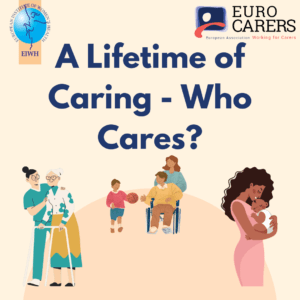
A Lifetime of Caring – Who Cares?
2023
Read this new report launched by the EIWH in association with Eurocarers.
This report explores the gendered nature of care work. Women spend on average 90 minutes more per day on unpaid care work compared to men and over 90% of formal carers are women. Therefore, the burden of care work, both formal and informal, is disproportionately placed on women and it is under-valued in society. Issues such as the care penalty and the gender pay gap in relation to care are discussed. Furthermore, this report explores the European Care Strategy, the policy context, demographics and socio-economic trends, as well as many other key points in relation to care in Europe. Each chapter concludes with a series of concrete and comprehensive recommendations.
Women in Europe: Toward Healthy Ageing
Midlife and Older Women’s Health Report.
2020

Women and Dementia in Europe
Addressing the Disproportionate Burden of Dementia on Women.
2019
Women’s Health in Europe
Facts and Figures across the European Union.
2006
Presentation by Dr.Rachel Iredale.
Women’s Health: EU Country Overviews
2006
This report represented the first attempt to have comparative statistics on all Eu countries with key data on health. We found that we needed to refer to a range of statistics on an ever growing number of EU partners for basic data about health and the major factors that influence the level of health enjoyed by various groups of EU citizens.
It covers Demographic and Socio-Economic Trends, population, basic health, major influences on health such as Employment, Lifestyle and major chronic diseases including heart, cancer and lifestyle disorders. Other areas will be added and updated when time and budgets allow.
Discrimination against Women and Girls in the Health Sector
2006
In August 2006, a survey was sent by the European Institute of Women’s Health to a series of expert advisors in eight European countries: Belgium, Bulgaria Germany, Greece, Poland, Portugal, Sweden and the United Kingdom. The EIWH gathered information for a report to the European Parliament on the topic of Discrimination Against Women and Girls in the Health Sector. This examined the state of women and young girls’ health, health policies for women and young girls, gendered patterns of health and specific health issues as they apply to women to each country.
Cervical Cancer in the EU and Accession Countries: An Audit
2003
The European Institute of Women’s Health presents this audit on cervical cancer screening throughout the enlarged European Union as our contribution to the debate around the draft EU Recommendation on Cancer Screening, due to be adopted by the European Commission in 2003. While the EU Recommendation is designed to promote quality screening in all cancers, this audit focuses on cervical cancer. The EIWH is convinced that national programmes coupled with the introduction of the latest in screening technologies, notably HPV testing, would not only consolidate the successes of the Pap smear, but could make a significant contribution to eliminating this virally-induced and slow-growing disease.
 Navigating Health: The Role of Health Literacy
2003
The changing health environment carries mixed blessings for citizens making health decisions. There’s more choice in treatment and more information to guide our choices; however, the deluge of information can be more confusing than helpful. Health care systems are becoming more complex and encompass a broader range of providers from different sectors than ever before. This rapidly-changing sphere of health demands a lot of patients.
Health decisions place them in a vulnerable position in which we must take risks without any certainty of outcome. This is true regardless of one’s educational level, culture or social status. Health literacy may help people navigate health and health care with a better understanding of potential consequences: a map and a compass on a difficult and unpredictable journey.
The European Institute of Women’s Health, along with the European Men’s Health Forum and Alliance for Health and the Future, co-authored this report on health literacy.
Engendering Health(y) Research Ethics in Europe
2003
This report is specific to Ireland and is part of an EU Project aiming to lay the groundwork for the development of a European instrument for the gender-sensitive assessment of biomedical research protocols. Five member States took part in the project, and carried out research in their respective countries examining the opportunities to integrate the gender perspective into the ethical review processes.
The two main research questions of the project are:
1) What exists presently in terms of legislation and regulations in regards to Research Ethics Committees (REC’s)?
2) Exploring if and how attention to gender can be implemented into the assessment procedures of RECs.
The complete report includes all five country specific reports, a comparison report and recommendations for the development of an instrument for a gender sensitive assessment for research protocols by RECs.
Older EIWH Reports
- Gender Equity in Public Health in Europe (2000)
- REMIND: Dementia Care, Challenges for an Ageing Europe (1999)
- Mid Life and Older Women’s Health: Facts and Figures Report (1998)
- Women in Europe – Towards Healthy Ageing Report (1996)